“Cold-backed” is paddock English. It is what a rider says when a horse dips as the girth comes tight, stands tucked as the foot hits the stirrup, or offers a small, ugly buck in the first circle and then, often, goes to work. On an Australian Stock Horse at a campdraft, on a pony at a Pony Club rally in Goulburn, and on a warmblood in an Adelaide Hills indoor, the word is the same. The cause is not.
This journal will not tell you that every cold-backed horse needs an animal chiropractor. It will tell you that the phrase is a description, that pain is the first hypothesis, and that behaviour is the last. That is why the piece sits on the signs and conditions desk rather than as a booking page.
What riders are actually seeing
The girth. The first sit. The first trot. A horse that blows and hollows, that cow-kicks at the flap, that will not let the rider mount from a block on the near side. A horse that is better by the end of the session and worse again on Thursday. A horse that is fine in the paddock and awful under saddle — a pattern we already flagged in signs a horse needs a biomechanical assessment.
Some horses are cold-backed on a cold morning and ordinary at midday. Some are worse in a particular saddle and civil in a bareback pad, which is information about leather as much as about joints. Some have been like this since they were started, which is information about the starting.
The equine chiropractic hub is the wider desk. What equine chiropractic is is the tool. Neither is a synonym for this word.
The list a veterinarian walks through
Pain in the thoracic spine, the wither, the sternum, the girth line, the ulcers, the ovaries, the feet, the hocks. Kissing spines. A poorly fitted tree. A rider who lands hard. A horse that was girthed in a rush as a four-year-old and has not forgotten. The veterinarian’s job is to decide which of those they can test. Gastric ulcers deserve their own conversation and their own medicine; they are a common extra on this list in performance horses, not a Facebook punchline.
Imaging, a saddle check, a gastroscopy where it is indicated, a lameness work-up if the horse is also short: that is not over-servicing. It is how you avoid paying for a year of “back work” on a horse whose girth sits on an ulcer.
Performance horses, saddle fit and the spine and farriers, saddlers and animal chiropractors are required reading before anyone names the lumbar spine as the whole story. Compensation, as ever, is how a foot becomes a girth reaction; limping, stiffness and compensation is that mechanism.
Where a trained practitioner may help
After the veterinarian is comfortable the horse is safe to treat, a person on the ABPA pathway can assess whether the thoracic segments under the saddle are moving, whether the wither is guarded, whether the poll is part of the brace. They can treat what they find, gently. They can tell you the horse is holding itself in a way that will make every saddle look wrong until the holding eases — a useful sentence for the fitter.
They cannot start a young horse. They cannot fit a tree. They cannot promise that a cold-backed paddock horse will become a reliable schoolmaster because a joint was adjusted. The evidence for manual therapy in this exact presentation is limited. Rider-reported improvement after a visit is common and allowed to matter. It is not a trial.
How to find a qualified animal chiropractor remains the consumer test. A weekend “cold-back specialist” is a marketing sentence.
The behavioural remainder
Some horses have been sore, have reacted, have been punished, and now react before the pain has time to speak. That is a real remainder. It is also the remainder people reach for too early, because “naughty” is cheaper than a work-up. A trainer who will start from pain, then from the saddle, then from the horse’s education, is worth more than a trainer who reaches for a bigger bit.
Lunging a cold-backed horse into a sweat so it “gets over it” is still common on Australian properties. If the veterinarian has found nothing and the saddle fits, a calm, short warm-up is ordinary. If the horse is explosive, the answer is not more lunging. It is a smaller question and a quieter yard.
How much does it cost to do this in the right order?
A veterinary consult, possibly imaging, possibly a gastroscopy: those are the large lines. A saddle consult is often a few hundred dollars before any work. A chiropractic visit is commonly reported at $130 to $280 plus travel in 2025. Doing them in the wrong order is how the small line gets repeated.
The old Shoalhaven mobile list on this domain saw plenty of paddock horses whose owners used this word. The useful visits were the ones that sat beside a veterinarian and a saddler. The rest were an hour in a yard.
When should I stop calling it cold-backed and go to the clinic?
When the reaction is new and severe. When the horse is neurologically wrong, febrile, or lame. When a buck is not a dip but a horse in real trouble. When the pattern is getting worse, not warming out. After a fall or slip, vet first if a reaction has put someone on the ground.
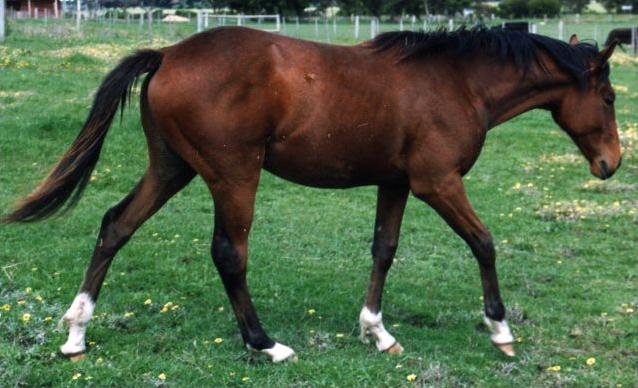
A stock horse can look collected in a photograph and still hate the first hole of the girth. Believe the horse. Name the pattern. Do not let a piece of paddock English become a diagnosis, a moral judgement, or a booking that skips the only profession allowed to decide what is wrong.