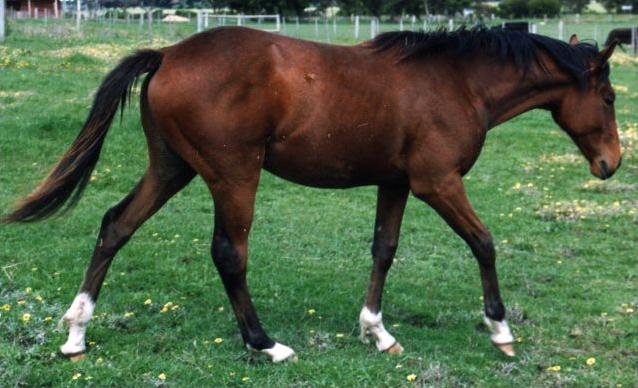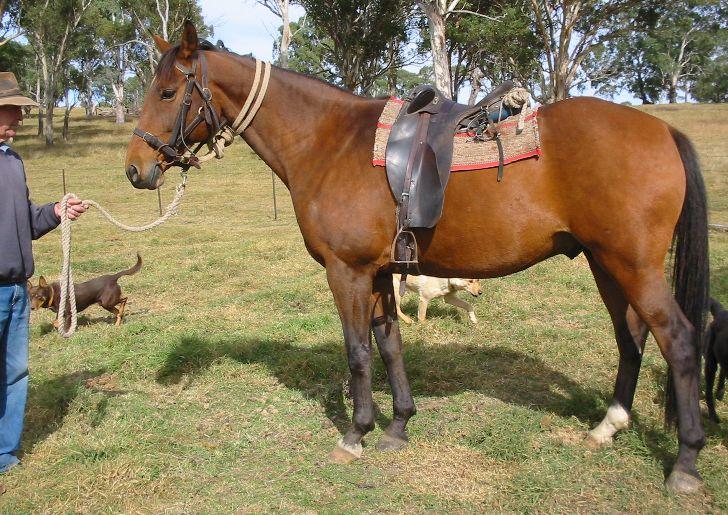
The photograph is a saddled Australian stock horse, kelpies nearby, ready for a day’s work. That is the honest picture of performance in this country: not only the warmblood in an indoor school at Werribee, but the campdraft horse at Warwick, the stock horse mustering on a place west of Tamworth, and the eventer trucking to Adelaide International. The saddle is part of the spine’s week. So is the rider.
Owners search for a chiropractor when the saddle slips, the horse hollows, or the left lead will not come. Those are reasonable searches. They are not a diagnosis. The equine chiropractic hub is the wider frame. This essay is the triangle of back, saddle and veterinary lameness.
What the spine is being asked to do under saddle
A horse carries a rider through the thoracic vertebrae, the ribcage and the muscles that hold the wither and the loin. Collection, a sudden stop on a cow, a drop fence, or a long day in a stock saddle all change the load. The poll and the atlas take the bridle. The sacroiliac region takes the hind end coming under. None of those structures works if a foot hurts or a hock is sore. Compensation, the word we use on the conditions desk, is how a mild lameness becomes a “back problem” by Saturday.
That is why a performance horse with a new hollow or a new reluctance to go forward is a veterinary horse first. Imaging, flexion tests, and a rider who will tell the truth about the last fall belong in that consult. What equine chiropractic is comes after.
Saddle fit is not a lifestyle extra
Australian saddles are a mixed fleet: old stock saddles with a high pommel, imported dressage trees, all-purpose fiddle patterns that fitted a different horse three owners ago, and racing exercises that were never meant for an hour of sitting trot. A fitter who will look at the horse without the rider, with the rider, and after twenty minutes of work is worth more than a Facebook opinion about gullet plates.
Bridging — the tree touching at the front and back and leaving a gap over the mid-back — concentrates pressure at the wither and the loin. A tree that is too narrow pinches. A tree that is too wide sits on the spine. A numnah that is folded, or a girth that galls, will make a civil horse look like a chiropractic case.
The reverse error is also common. A horse with a sore thoracic spine or a sacroiliac region will change shape under the saddle. The fitter then chases a moving target. The useful sequence is: veterinarian, then fitter and musculoskeletal practitioner in conversation, not in competition. Farriers, saddlers and animal chiropractors is that conversation written out.
What an animal chiropractor can add, and what they cannot
A trained practitioner — the ABPA pathway, not a weekend spinal course — can feel whether the thoracic segments under the saddle are moving, whether the wither is guarded, whether the pelvis is even, and whether the neck is part of the story. They can treat what they find, gently, after the veterinarian has said the horse is safe. They can tell you the saddle looks as if it is sitting on a horse that is holding itself, which is a useful sentence to take back to the fitter.
They cannot certify a saddle. They cannot clear a horse for a three-star. They cannot promise that an adjustment will make a long-backed thoroughbred carry itself like a short-coupled stock horse. Racehorses, eventers and dressage is about those different jobs. The spine is shared. The load is not.
Kissing spines, facet osteoarthritis, and a true sacroiliac injury are veterinary diagnoses. Some of those horses will still have manual therapy in the plan. The plan is written by the veterinarian.
Rider, teeth, feet
A crooked rider on a straight horse will produce a one-sided back. A horse with sharp cheek teeth will throw its head and look cervical. A long-toe, low-heel foot will change the way the hind end comes under. None of this is an argument against chiropractic. It is an argument against chiropractic as a closed shop.
The old mobile circuit on this domain — Nowra, Milton, Berry, Kiama, Kangaroo Valley, the Illawarra — only worked because other trades already existed in those towns. That is still true in the Hunter, the Darling Downs and the Adelaide Hills.
How much does it cost?
A saddle consult in 2025 is often a few hundred dollars before any flocking or a new saddle that can run into the thousands. A chiropractic visit is commonly reported between about $130 and $280 plus travel. The veterinary lameness work-up, if it includes imaging, will dwarf both. Owners who try to save money by skipping the veterinarian and buying a visit plus a sheepskin are not saving money. They are delaying the film.
When should I stop chasing the back?
Stop if the horse is lame and you have not had a lameness work-up. Stop if every new saddle is “almost right” and the horse is still hollow — that is a medical or training problem wearing leather. Stop if a practitioner wants to adjust a horse with neurological signs, a fever, or a recent fall that has not been examined; after a fall or slip, vet first is not optional.
A performance horse is allowed to have a back that needs help. It is also allowed to have a saddle that does not fit, a rider who sits to the left, and a hock that should have been radiographed last spring. Equine chiropractic earns its place when those other sentences have been said out loud. Until then it is a hopeful hour in a yard, and the horse knows the difference.