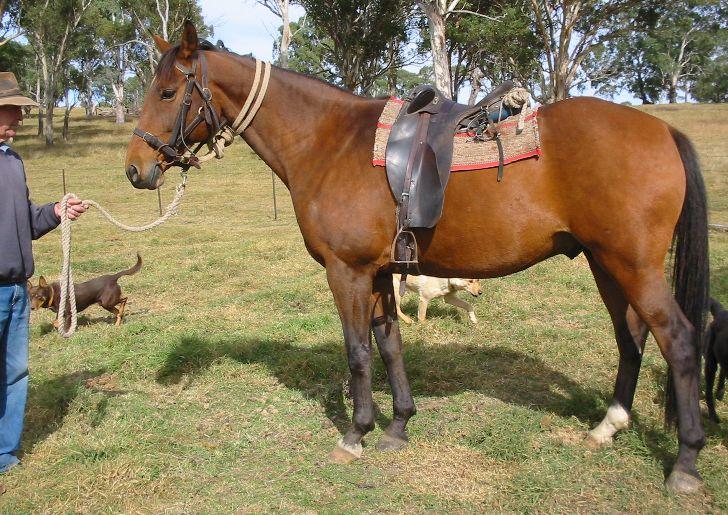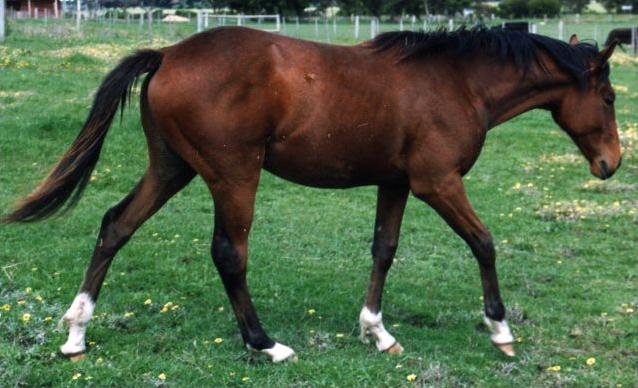
A horse that has come down — on a wet road at Kangaroo Valley, on a cross-country drop, in a campdraft yard at Warwick, or in an ordinary paddock after rain — is a veterinary patient until a veterinarian says otherwise. That sentence should be dull. It is not, because the next sentence owners hear from a well-meaning friend is “get the chiropractor out, he’ll be right.”
He may be right. He may also have a fracture that is not yet lame, a neck that is not safe to manipulate, or a neurological lesion that will declare itself overnight. Manual therapy is adjunctive. After trauma it is not the first pair of hands.
What a fall does that a sore back does not
A slip or a fall is an energy event. The poll, the wither, a hip, a stifle, a shoulder or a rib can take the ground. The spinal cord can be shaken without a fracture you can see from the house. A horse that stands and walks can still have a problem that is not a “restriction.” Calling it a restriction is how people delay the film.
Eventing falls have their own literature and their own fear. A rotational or a heavy peck is not a cold-back story. Racehorses that come down on the track have an official veterinarian and a protocol. Paddock slips are quieter and easier to minimise: “he sat on his tail, he’s fine.” Fine is a veterinary word.
The equine chiropractic hub is for horses that are safe to treat. This page is the door you do not skip.
What you do in the first hour
Keep people safe. A frightened horse on a road or in a yard will add a human injury to the file. If the horse is down and cannot rise, call the veterinarian and follow their instructions. Do not haul on a head or a tail because a video said it helps. Do not let a manual therapist start work on a recumbent animal.
If the horse is up, look — without turning it into a lameness exam in a ditch — at whether it can walk, whether the neck moves, whether there is a wound, whether the breathing is ordinary, whether the eyes and the muzzle look even. Then call the clinic. A short video of the walk, if it is safe to take one, is useful. A diagnosis over the phone is not.
Signs a horse needs a biomechanical assessment is a later page. Incontinence and spinal pain is written for dogs, but the principle travels: loss of control, inability to rise, and obvious neurological change are emergencies in both species.
What the veterinarian is looking for
Fracture. Joint instability. A neurological lesion. A haemoabdomen or other internal injury if the fall was bad enough. A wound that needs to be closed. Pain that needs medicine, not a theory. They may want radiographs, ultrasound, or a night of observation. They may say the horse is bruised and can rest in a yard. They may say this is not a horse that should be manipulated.
That last sentence is the one a careful animal chiropractor wants in writing or by phone. The qualifications desk exists because not everyone who offers “equine adjustment” will wait for it. Veterinary referral and state practice acts is the legal version. Diagnosis is veterinary science.
Where chiropractic may fit later
Days or weeks later, a horse that has been cleared, that is stiff, that is holding a poll or a pelvis, may be a candidate for a trained musculoskeletal look. The person should be on the ABPA pathway — primary degree plus RMIT animal chiropractic or Box Hill animal biomechanical medicine — and they should have the veterinary letter in the glovebox.
What they do is described in what equine chiropractic is: watch, palpate, treat specific findings, write back. What they do not do is “put the wither in” the morning after a fall because the saddle looks crooked. The saddle may be crooked because the horse is swollen.
Eventers and racehorses have calendars that punish rest. That is not a clinical argument. Racehorses, eventers and dressage is about those calendars. Scratching is still cheaper than a second injury.
How much does the wrong sequence cost?
A veterinary call-out after a fall is already expensive, especially after hours on a road between Nowra and Milton. Adding a mobile musculoskeletal visit the same evening does not make the invoice wiser. Informal 2025 figures for a chiropractic visit sit around $130 to $280 plus travel. Spend that later, if at all, on a horse that has been examined.
The old Shoalhaven mobile list on this domain was a circuit of ordinary yards. It was not an accident service. That distinction still holds.
When should I stop waiting and go back to the clinic?
Go back if the horse that was walking is now ataxic, if a limb that was sound is now non-weight-bearing, if the neck that was moving is now locked, if the horse is becoming dull, febrile or colicky, or if it cannot rise the next morning. Those are not “it can take a few days.” Those are clinic hours.
Do not start manual therapy if the veterinarian has not been called, if the horse is neurologically abnormal, or if the practitioner wants to treat without a history of the fall. Do not continue if the horse is worse after a visit.
How to find a qualified animal chiropractor still applies when the time comes. The first qualified person on the file is the veterinarian. The second, if there is a second, waits their turn. A stock horse can look collected in a photograph and still have a neck that is not for amateur hands. After a fall, believe the physics, not the optimism.