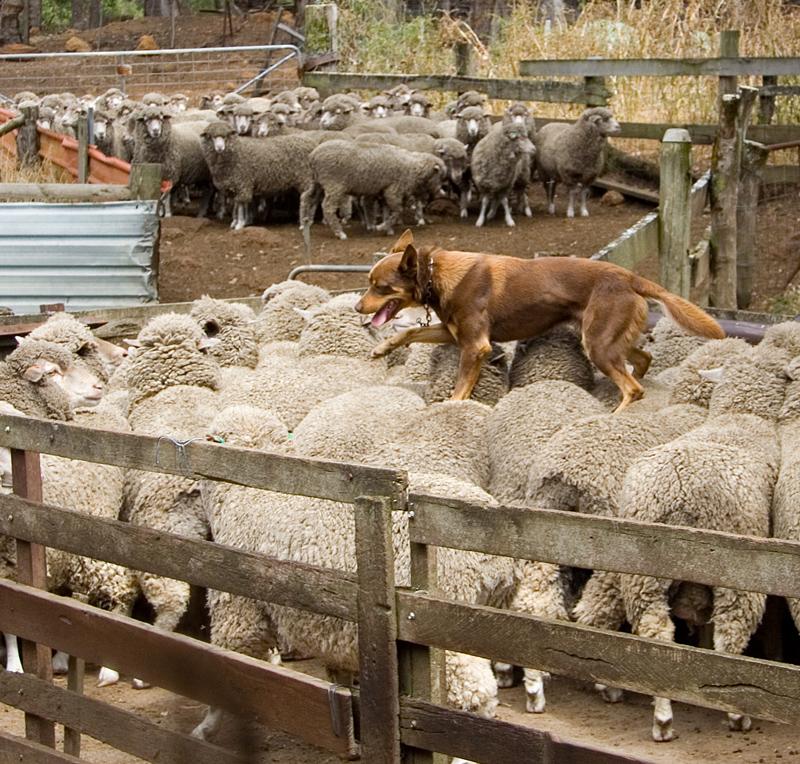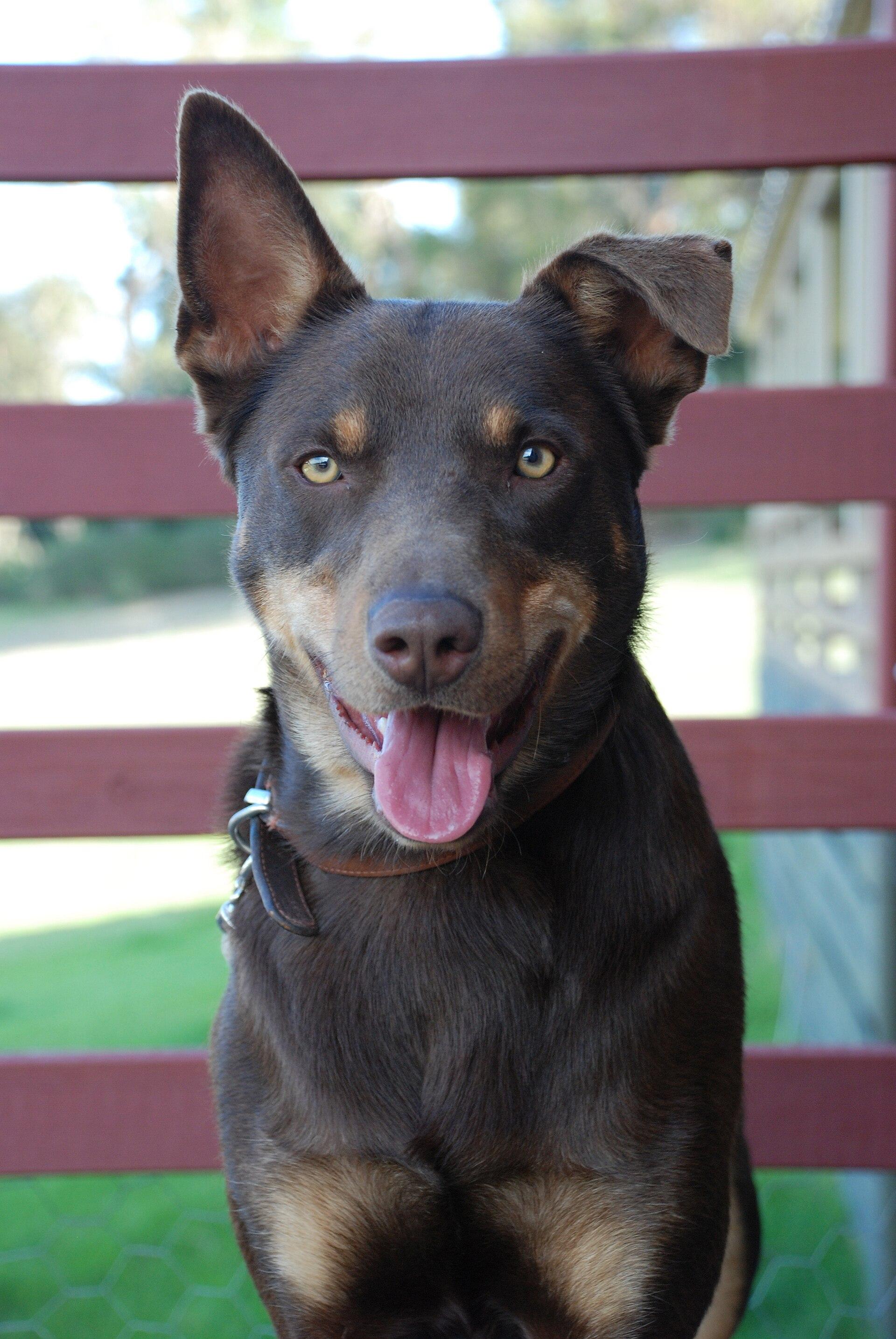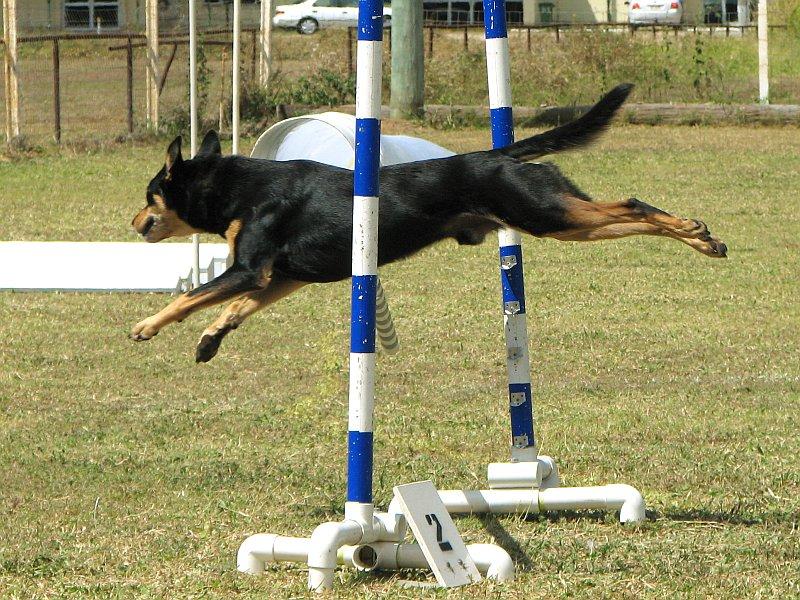
A kelpie that walks the backs of sheep at a New England woolshed, a red cattle dog that spends Saturday in a campdraft arena at Warwick, and a suburban agility dog that tiles a Dogs Victoria course on Sunday morning are not the same animal as the couch staffy — even when the breed on the registration paper is the same. The load is different. The calendar is different. The temptation to treat a hitch as a scheduling problem is stronger, because someone has already paid the nomination.
None of that changes the order of care. Working and sporting dogs still belong to a veterinarian first. Animal chiropractic, when it is offered by someone with a real postgraduate animal qualification, is adjunctive. It does not “keep them sound” in the way a feed-store conversation implies.
What the work actually does to a dog’s spine
Yard work asks a kelpie to twist, leap and balance on moving backs. The photograph that sits on this article — a dog crossing sheep in a race — is not a metaphor. The thoracolumbar junction and the lumbosacral region take repeated rotation. The neck takes the sudden stop when a ewe turns. Feet take everything, which is why a missed abscess or a split web will fake a back problem every time.
Campdraft and cattle-dog work add acceleration and hard turns on dirt that changes with the weather. An Australian cattle dog that has been jarring off a near-fore for a month will often arrive with a compensatory lumbar bend and an owner who wants the back “put in.” The useful question is which structure started the story.
Agility and flyball are suburban versions of the same physics: collected take-off, a sharp turn in a weave, a box that loads the shoulders and the lumbar spine in a fraction of a second. A kelpie that starts dropping bars with the hind end may have a sore back. It may also have a toe, a biceps, a hip, or a training error. What canine chiropractic is is the definition of the tool. It is not a season plan.
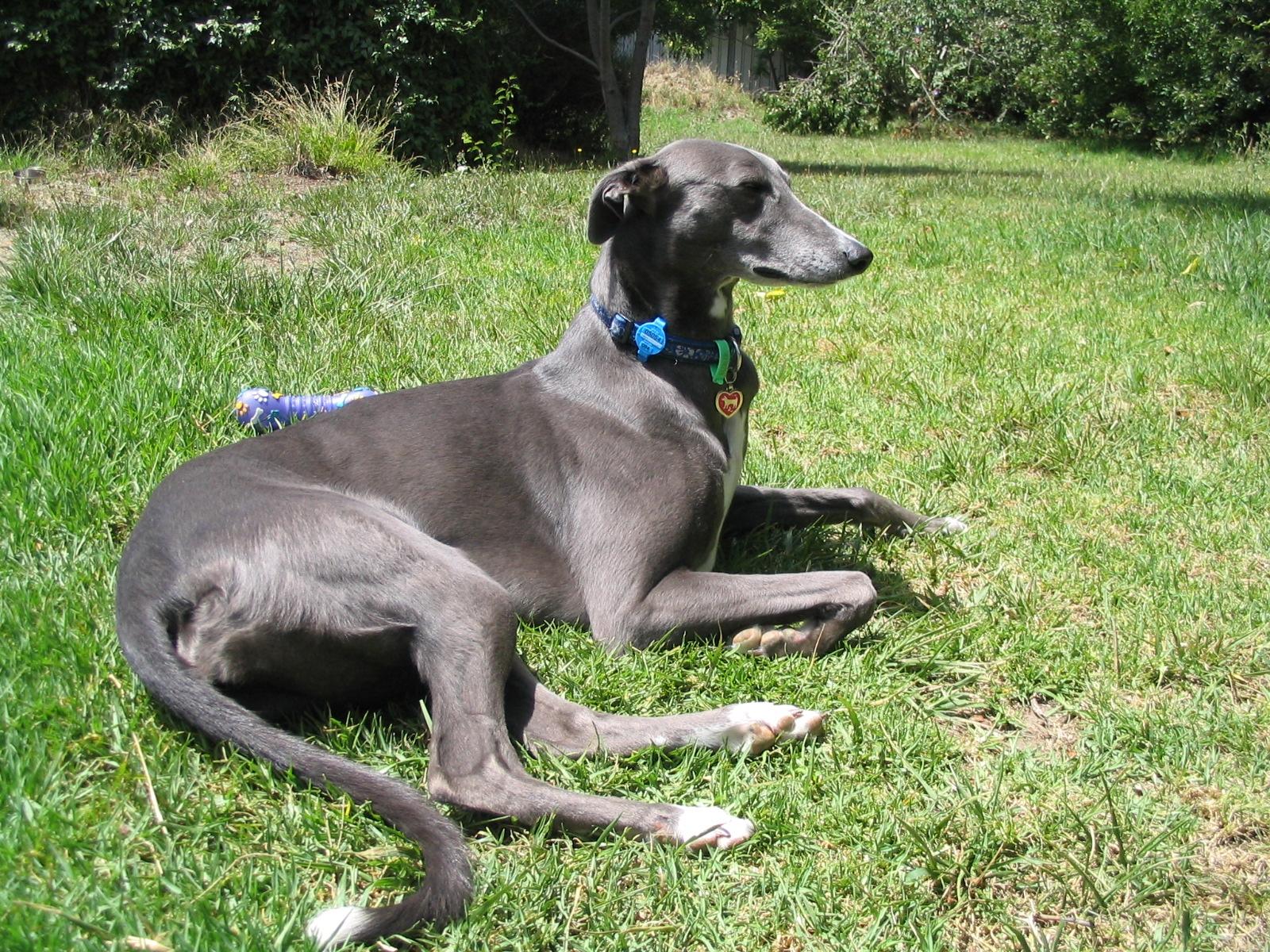
Retired racing greyhounds sit in a third category. They come off tracks at Wentworth Park, Sandown or Cannington with a history that is only partly written down. Long lumbar spines, old hock and stopper injuries, and a second life on a Melbourne or Shoalhaven couch produce a lot of stiffness and a lot of bunny-hopping. Some of that is pain. Some of it is habit. A veterinarian who sees many greys is the person who should sort the two.
What does an animal chiropractor do for a sporting dog?
After a history that includes the actual work — not “he’s pretty active” — a trained practitioner watches the dog on a surface that means something. A car park is a poor agility course. A clinic corridor is a poor woolshed. They will still take what they can get: walk, trot, turns, a jump onto a table if the dog is a jumper in real life. Palpation of the neck, the back, the pelvis and the obvious limb joints follows.
The adjustment, if there is one, is specific. Instrument work is common on lean, nervous or small dogs. Hand work on a 22-kilogram kelpie should still not look like someone wrestling a limb. Soft-tissue work and a conversation about the next week’s load are usually the rest of the hour. The canine chiropractic hub sets that expectation.
What they should not do is diagnose a cruciate, clear a dog for a carnival, or tell you to stop the anti-inflammatory the veterinarian prescribed so the “body can speak.” Those sentences are how a season ends in a specialist waiting room.
When the calendar is the injury
Owners of trial dogs are used to booking farriers-of-a-sort — nail trims, pads, a physio the week of a state championship. Manual therapy slides into that calendar too easily. A first visit the night before an Easter carnival at a showground is a bad idea: you do not know how the dog will feel the next morning, and you have no baseline.
A more honest pattern is a veterinary soundness check at the start of a heavy block of work, a practitioner who already knows the dog if the vet is comfortable with that, and a willingness to scratch. Scratching is cheaper than a disc.
Signs your dog may need a musculoskeletal assessment is the list of hitch-in-the-gait moments that should not wait for the end of the season. After veterinary surgery, where chiropractic fits is for the dog that is coming back from a TPLO or a shoulder and is being asked to trial again too soon.
Evidence, not folklore
There is no robust Australian trial that shows a calendar of chiropractic adjustments prevents injury in working kelpies or agility dogs. There are owner stories, practitioner case notes, and a biomechanical rationale that is easy to like if you have watched a dog work. Like the rest of this field, the published evidence is limited. Say that to the trainer who swears by a particular pair of hands. The hands may still be useful. They are not a vaccine.
Sports-medicine veterinarians — the people who already work the greyhound tracks and the agility circuits — will often be more useful than a manual therapist if the question is “why is this dog lame.” They can image, inject, and say no. A trained animal chiropractor can sit beside that work. They cannot replace it.
How much does it cost, and who travels?
Working dogs live on properties. Practitioners travel. Informal 2025 figures put a canine visit in the $90 to $180 band, plus a travel levy that can double the invoice if you are an hour off the Newell or the New England Highway. Some owners bring the dog to a clinic room, which is how the old Woollamia practice on this domain saw canine patients: a purpose-built space, not a paddock. That arrangement still exists in some towns. It is easier on a small dog and harder on a truckload of trial kelpies.
Pet insurance may or may not contribute. Many farm dogs are uninsured. Budget for the veterinarian first.
When should I stop?
Stop the work, and stop the sport, if the dog’s pattern is getting worse, if a hind end is becoming weak, or if anyone in the team is talking about “pushing through.” Stop booking maintenance visits if you cannot say, in a sentence, what is being treated. A working dog is not a subscription.
If the presentation is neurological, stop entirely and go to a clinic. Incontinence and spinal pain is not a sporting essay. It is the line you do not cross.
The rest of a sensible season is ordinary: weight, feet, rest days, a veterinarian who sees the kennel, and — if you add a manual therapist — someone you can find on the ABPA list or through the qualifications desk. How to find a qualified animal chiropractor is the consumer test. The dog’s job does not lower it.